
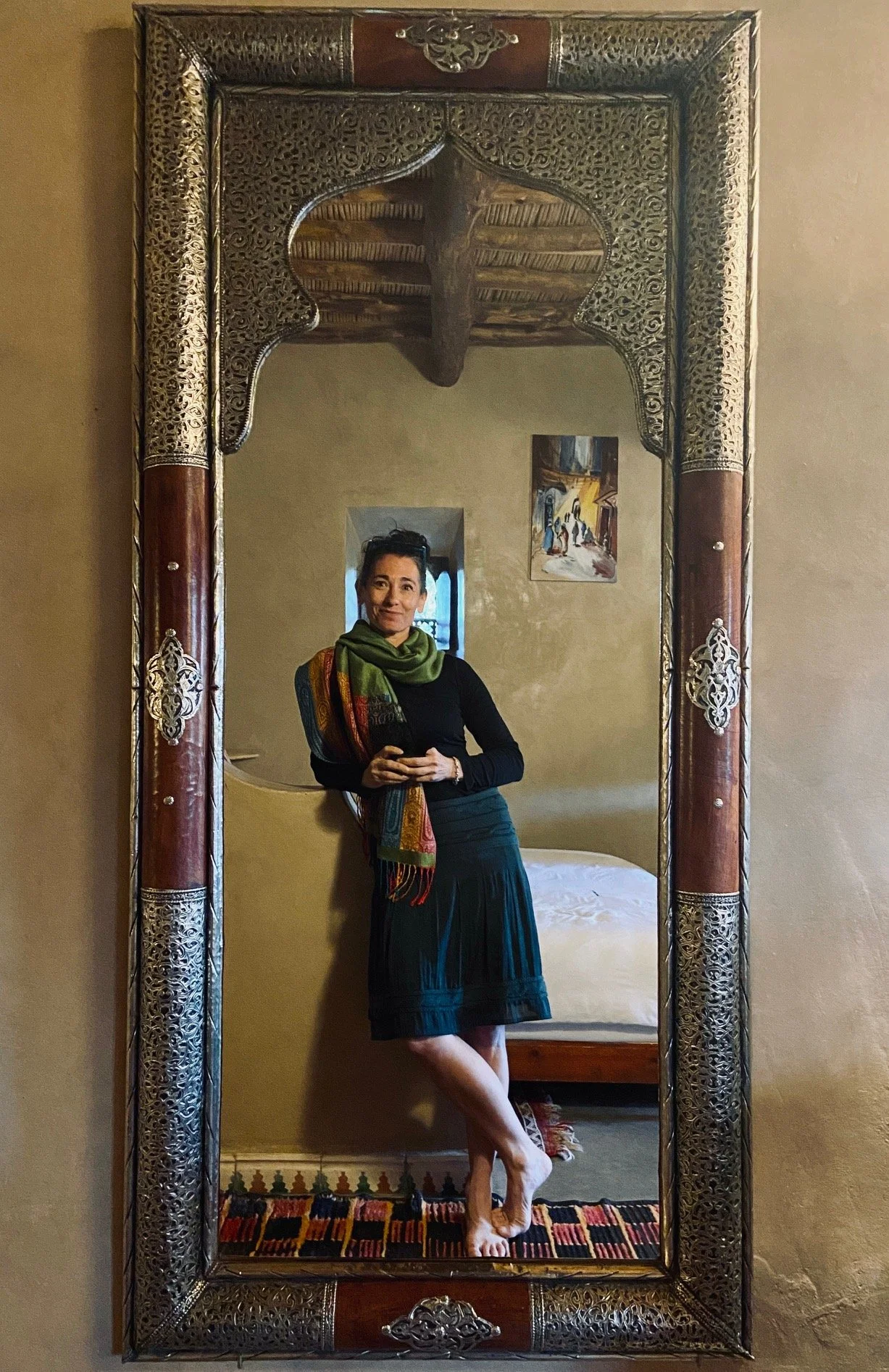
Kim Gontié
General Manager
Born and raised in France, Kim brings a European perspective on culture, food and history to her role as General Manager of BPA. She oversees the design and delivery of bespoke Morocco journeys, from initial concept through to final execution, ensuring each itinerary is carefully structured, commercially considered and grounded in destination knowledge.
Her focus is on translating traveller expectations into journeys that are both coherent and realistic, aligning creative design with the practical realities of travel in Morocco.
QUICK FACTS
BASED IN: Tasmania
WITH BPA SINCE: 2015
FAVOURITE MOROCCAN DESTINATION: Atlas Mountains
FAVOURITE MOROCCAN INGREDIENT: Amlou (decadent almond butter blended with argan oil 🤤)
Getting to know Kim
I first became involved with BPA after meeting Carol Prior while living in the Blue Mountains. At the time, I was immediately drawn to her stories of Morocco; the colour, the contrasts, and the sense of depth she described left a lasting impression. That initial connection eventually led me into BPA, and into a country that continues to reveal something new with every visit.
Much of my work sits in understanding what clients are really looking for, often beyond the destinations or experiences they initially mention. I spend time listening to how they want to travel, how they like to move through a journey, and what pace and style will suit them best.
I often think of itinerary design as a puzzle. There are many moving parts: destinations, timing, logistics, accommodation and experience, and the challenge is bringing them together in a way that feels coherent, considered and effortless in execution.
What I find most rewarding is seeing how a journey evolves once clients are actually in Morocco. Expectations often shift quickly once they arrive, and it is those unexpected moments that tend to stay with people long after they return home. When travellers come back and recommend BPA to friends or family, it feels like a quiet reflection of the care that has gone into shaping their experience.
In conversation
What makes designing a Morocco itinerary more complex and more interesting than people might expect?
The complexity isn’t in finding things to do, it’s in deciding what not to do. Morocco is one of those destinations where over-planning can ruin the experience. The difference between a good trip and a great one usually comes down to pacing, sequencing, and resisting the urge to overfill it. So the real work is editing, not adding.
What is the first thing you try to understand about a traveller before designing their itinerary?
People will often start by listing destinations or experiences, but that rarely explains the rhythm they’re looking for -how much movement they want, how much time they want to stay in one place, and whether they prefer a more immersive pace or something more varied and fast-moving. Once I understand that underlying approach, everything else becomes much clearer: which regions make sense, how to structure the route, and how to balance logistics with time to experience each place properly.
What makes designing a Morocco itinerary more complex and more interesting than people might expect?
Travel times between regions can involve significant long drives; also changes in landscape, pace and experience, which means routing and timing become critical. It’s not just about connecting destinations, but about understanding how each transition will feel for the traveller. That complexity is also what makes it rewarding. With the right structure, you can create journeys that shift naturally between very different environments, from cities, to sea, to summits, to desert, while still feeling cohesive and well-balanced rather than fragmented.
What is one experience in Morocco that you think every traveller should consider?
A couple of well-placed nights in a different environment can completely change how the country is experienced. That might mean moving from a riad in the medina to a more open, landscape-led setting in the Atlas Mountains or the desert, or the other way around. It’s not about the accommodation in isolation, but about how each place changes the atmosphere and perspective of the trip. Without that variation, travellers can miss the full breadth of what Morocco offers. When it is done well, those changes in environment often become some of the most memorable parts of the journey.
What’s one misconception about travelling in Morocco that you regularly have to correct?
That Morocco is difficult to travel in, or requires a compromise in comfort or safety. In reality, most of the perceived challenges come down to planning rather than the destination itself. When the logistics and local support are properly considered, Morocco becomes a very accessible and highly rewarding country to travel through. This is particularly relevant for solo travellers, including women travelling independently. Luckily, these assumptions often disappear very quickly once people are on the ground.
How would you describe Morocco in three words, and why?
Layered, because meaning is rarely direct or singular. Conversations, interactions and everyday exchanges operate with nuance; things are implied as much as they are said. It can be subtle, sometimes even frustrating if you’re used to more direct communication, but it is also part of a deeply embedded cultural rhythm that reveals itself over time. I am still learning!
Dynamic, because it is a country that is constantly moving and evolving, both in its cities and its everyday life. Nothing feels static.
Contrasting, because some of the most striking moments come from how different elements sit alongside each other: old and new, calm and chaotic, refined and raw. Those contrasts are what make it such a compelling destination to design and travel through.