

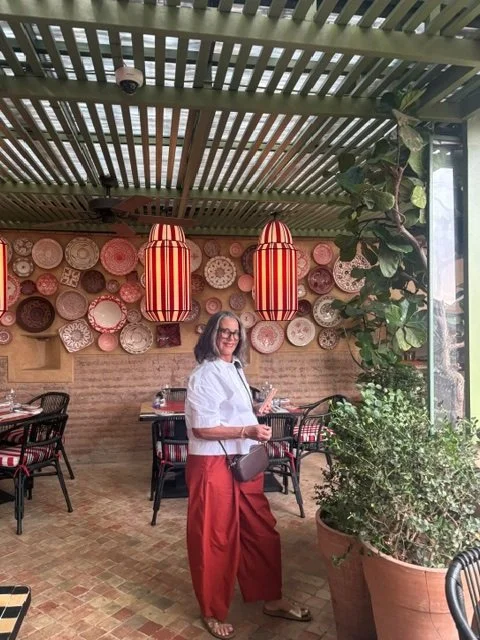
Susie Fernie
Director
Born in Scotland, Susie’s love of travel was shaped through her early career with British Airways, which took her across the world and sparked a lifelong interest in culture, design and food. Having lived in several international cities, she developed a natural curiosity for how people live, eat and create in different places.
Today, she brings that perspective to BPA’s small group tours, with a particular focus on the sensory details that make a destination memorable, from local cuisine and markets to the craftsmanship and everyday objects that tell a deeper story of place.
QUICK FACTS
BASED IN: Sydney NSW
YEARS IN THE TRAVEL INDUSTRY: Over 40
FAVOURITE MOROCCAN DESTINATION: Marrakech
FAVOURITE MOROCCAN DISH: Chicken tagine
Meet Susie
Travel has been a constant thread throughout my life, first through my years with British Airways, and later through living in different cities around the world with my family. Those experiences gave me an enduring curiosity about how people live in different places, and a real appreciation for the small details that bring a destination to life.
Food has always been at the centre of that curiosity. For me, it is one of the most direct ways to understand a culture, whether that’s exploring local markets, learning traditional recipes, or simply observing the role that food plays in everyday life. My time in Morocco has been particularly influential in this respect, and it has certainly changed how I cook and think about food at home.
Alongside Alastair, I host BPA’s small group tours in Morocco, which is something I genuinely enjoy. It’s a privilege to share a destination I care about, and to help guests notice the details they might otherwise miss: the textures, flavours and small moments that often become the most lasting memories of a journey.
For me, the most rewarding part of travel is not only seeing new places, but experiencing them in a way that feels personal and connected. Morocco, in particular, is a destination that constantly offers that.
In conversation
What aspect of Moroccan culture do you find most fascinating?
What I find most fascinating is the way hospitality is expressed through everyday interactions in Morocco. It’s not just a sense of warmth in a general way, but a genuine attention to detail in how guests are received, whether that’s the way tea is prepared and served, the rhythm of a conversation, or the pride people take in sharing their home or work. It’s a very natural generosity, and it makes every visit feel both easy and memorable.
What are one of your favourite Moroccan treasures to shop for and bring home?
One of my favourite things to shop for in Morocco is anything handmade that reflects the country’s craftsmanship, particularly textiles, ceramics and woven pieces. We did buy a Berber rug on a recent visit, and it now has pride of place in our home. It’s a constant reminder of the colour, texture and richness you find throughout Morocco, and of the skill and artistry behind so many of the pieces you come across. What I love is that these aren’t just souvenirs, they are functional, beautifully made objects that carry a sense of place with them long after you’ve returned home.
Which Moroccan city best reflects your personal style and why?
Rabat and Tangier both resonate with me, but in quite different ways. Rabat is a city with a sense of order, space and understated elegance. There’s a softness to its coastal setting and a refinement in its architecture and atmosphere that I find very appealing. Tangier, on the other hand, feels more layered and expressive. It has a creative energy that comes from its position between continents, where different influences meet and overlap in a way that feels both historic and contemporary. Together, they reflect two sides of Morocco that I am particularly drawn to, the quiet refinement of detail, and cultural contrast.
What is one experience in Morocco that you think every traveller should have?
One experience I think every traveller should have is sharing a meal with a local family in the Atlas Mountains. What makes it so memorable isn’t just the setting, but the sense of being welcomed into everyday life. I love the way food is prepared and served and the small details that reveal so much about daily routines and traditions. It’s a very simple experience on the surface, but one that stays with you long after you leave, because it feels so personal and grounded in real life.
What do you notice about how travellers respond to Morocco for the first time?
One of the first things I notice is how travellers respond to the contrast between expectation and reality, particularly when it comes to accommodation. Many arrive with little sense of what lies behind the unassuming doors of a riad, and it’s always interesting to watch that moment of discovery when they step inside and find a calm, beautifully restored courtyard that feels completely removed from the street outside. It’s often that shift from external simplicity to internal detail and atmosphere that begins to change how they see the country as a whole. From there, guests tend to become far more attuned to the small details that make Morocco so distinctive.